Key Takeaways
-
01
Magnetic GPS trackers hide under bumpers, inside wheel wells, and along the vehicle frame.
-
02
OBD-II GPS trackers plug into the dashboard diagnostic port and draw continuous vehicle power.
-
03
Hardwired GPS trackers wire into vehicle power and require careful disconnection to prevent damage.
-
04
Common interior GPS hiding spots include under seats, inside the glove box, and door panels.
-
05
RF signal detector devices scan for active GPS tracker transmissions hidden on a vehicle.
-
06
Removing a GPS tracker from a vehicle you do not own can violate state laws.
How To Remove GPS Tracker From Any Car Safely
If a GPS tracker is installed on your car without your consent, the safest way to deal with it is to identify the device, understand how it's powered, and remove it without interfering with the vehicle's electrical system.
Finding and removing a GPS tracker from your car follows a clear process when done step by step, but there are a few important things you must know before doing it. There could be serious financial, mechanical, and even legal implications of removing the GPS tracking device.
In this article, I'll show you how to remove a GPS tracker from your car easily without ruining the electrical system. You'll also learn when it's better to stop and get professional help, along with the legal considerations that matter before taking action.

The GPS Tracker You Actually Own
Track Any Vehicle You Own, Legally & in Real Time
Compact, magnetic, and built to hide anywhere on your vehicle. Legal on any car in your name, real-time updates every 3 seconds.
Before You Start: Important Safety and Legal Notes
Removing a tracker from your car is not always risk-free. Some tracking devices connect directly to the car's electrical system, and improper removal can cause battery drain, blown fuses, or damage to onboard electronics.
In certain situations such as fleet tracking or company-owned vehicles, GPS tracking may be legal, which affects whether removal is allowed. If the car is not exclusively yours, or if you are unsure how the tracker connects to the car's power, seeking professional help is the safest option.
Types of Vehicle GPS Trackers You Might Find on a Car
Most hidden vehicle GPS trackers fall into three categories: magnetic, OBD-II, or hardwired. Identifying the type first matters because each one connects to the car differently and requires a different removal approach.
The location of a hidden GPS tracker depends heavily on the type of tracker installed. Different power sources influence where they are usually placed on a vehicle.

1
Magnetic (Portable) GPS Trackers
Magnetic trackers are portable GPS trackers with an internal rechargeable battery. They do not connect to the car's electrical system. Instead, they attach to a metal surface using a strong magnet or sit in a hidden space in your car, and they transmit location data independently.
What This Means For Removal- Usually the easiest to remove
- Tracking stops immediately once detached from the vehicle
2
OBD-II GPS Trackers
OBD-II trackers plug directly into the car's diagnostic port, usually located under the dashboard near the steering wheel. OBD-II GPS trackers draw continuous power from the car's electrical system, allowing them to track location whenever the vehicle is in use.
What This Means For Removal- They stop working as soon as they are unplugged
- No cutting or tools are required
3
Hardwired GPS Trackers
Hardwired GPS trackers connect directly to the car's electrical system. They are often hidden behind interior panels, near the fuse box, or inside the engine compartment, and they draw power straight from the vehicle.
What This Means For Removal- Removal requires caution to avoid damaging the electrical system
- Cutting the wrong wire can damage the electrical system
- Improper removal can cause battery drain or electrical issues
- Professional assistance is often the safest option
The next step is inspecting the most common hiding spots on a car, starting with portable GPS trackers.
Step 1: Inspect the Magnetic or Portable GPS Tracker on a Vehicle

Magnetic and portable GPS trackers are usually placed where they are easy to attach, difficult to notice, and exposed enough to transmit location data reliably.
Start your search by focusing on the exterior of your car, then move inside once those areas are clear.
A.
Common Exterior Hiding Spots
I usually start outside the car because these locations are easier to access and quicker to inspect before opening any interior panels.
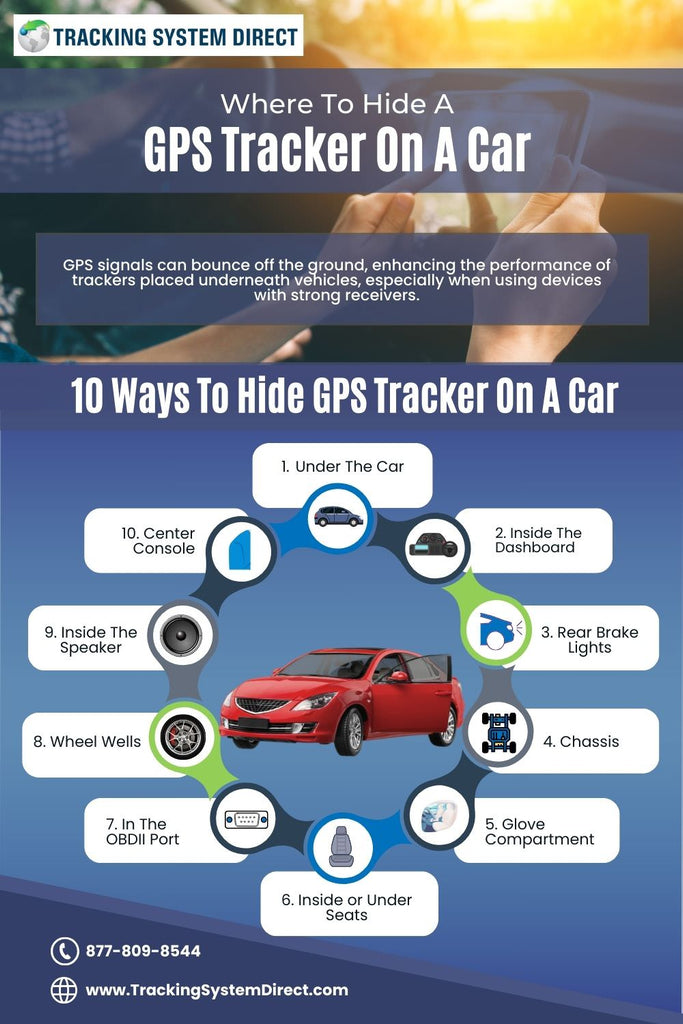
- Wheel wells: Trackers can blend in with suspension and brake components, making them difficult to spot at a glance.
- Undercarriage near the frame: Flat metal frame rails provide an ideal mounting point for magnetic GPS trackers.
- Inside or behind bumpers: These spaces keep the device hidden while allowing enough sky exposure for GPS reception.
- Under the vehicle on metal surfaces: A strong magnet lets portable trackers attach securely without any wiring.
- Near exhaust heat shields or crossmembers: Dirt and road grime help disguise the tracker, making it easier to overlook during a quick inspection.
These areas allow a tracker to stay hidden while maintaining a reliable GPS signal. Use a flashlight to inspect seams, brackets, crossmembers, and recessed metal surfaces where a magnetic tracker could be attached.
B.
Common Interior Hiding Spots
If nothing shows up underneath the vehicle, move inside and inspect areas where a small GPS tracker can be tucked away without drawing attention. Interior placement is less common for magnetic trackers, but someone with brief access to the cabin may hide one in a discreet location.
- Under seats: Check around seat rails, mounting brackets, and wiring harnesses.
- Inside storage compartments: Inspect the center console, glove box, door pockets, and other storage areas.
- Behind trim panels: Small devices can be tucked behind removable plastic panels or interior trim.
- Beneath floor mats: Look near the vehicle's body structure where a tracker may stay concealed.
Inspect each area carefully and watch for small boxes or puck-shaped devices that do not appear to be part of the vehicle's factory equipment.
Step 2: Inspect the OBD-II Port for Vehicle Trackers

OBD-II GPS trackers plug directly into the vehicle's OBD-II port, and because they're quick to install, this port is one of the most common places I see trackers in cars.
On most cars, the OBD-II port sits under the dashboard near the steering wheel or driver's door. The exact spot changes by model, so if you're not sure, check your vehicle's user manual and it will point you to it.
Once you've found the port, slow down and take a close look. These trackers are meant to blend in, so rushing through this step makes them easy to miss.
- Confirm what belongs there: If you didn't plug a device into the OBD-II port yourself, don't assume it's factory-installed.
- Use a flashlight and look around the port: Check behind and above it too. Some devices are tucked slightly out of sight or pushed back behind trim.
- Watch for small, unfamiliar devices: Many OBD GPS trackers look like thumb drives, compact black modules, or small data connectors that are almost identical to diagnostic tools.
- Check for an OBD splitter: Some trackers are hidden behind splitters that allow another device to use the port at the same time. If there's more than one connector involved, look closely.
If you do find a tracker, removal is usually simple. If you need help locating the OBD port on your vehicle, this resource walks through the exact placement by make and model: Where is my OBD2 port?
If you are unsure what should or should not be connected, check your user manual to confirm what factory-installed components look like.
|
|
||||||||||
 Buy on Amazon
 Step 3: Check the Car's Electrical System Carefully

If nothing has turned up so far, the tracker may be hardwired into the car's electrical system. This is the most sensitive step in the process, so take your time here.
Hardwired GPS trackers draw power by connecting to ignition wires, fuse boxes, or constant power lines. When handled incorrectly, they can cause electrical issues or ongoing battery drain, so this isn't the place to rush or guess.
Before you start looking, put on safety gloves and goggles to protect yourself from any potential sparks or battery acid, then handle the basics first:
- Turn off the ignition completely
- Disconnect the car battery, starting with the negative terminal
- Give the system a few minutes to power down
This keeps you and your car safe while you inspect.
What I Look for When Checking the Electrical System

Most factory wiring is tucked away neatly. Trackers usually stand out because something looks slightly off. Common signs include:
- Loose or unfamiliar wires that don't match the factory layout
- Electrical tape in places not shown in the vehicle's user manual
- Unexplained battery drain, especially if it started recently
- Changes to the wiring setup compared to diagrams in the owner's manual
You should also check behind interior panels, under the dashboard, and near the fuse box. Hardwired trackers are often hidden where they're easy to tap into power but hard to see at a glance.
A flashlight helps here. Wire cutters should stay in your pocket until you're absolutely sure what you're looking at, because cutting the wrong wire can turn this into an expensive afternoon.
Quick reality check: Car manufacturers don't use mystery wires. If something looks added, it probably was.
A Note on Color Codes and Manuals
Wire colors vary by manufacturer. Red isn't always power, and black isn't always ground. Your vehicle's user manual or wiring diagram is the safest reference before touching anything. If a wire doesn't match what the manual shows, stop and double-check.
Helpful Video: How to Identify Car Battery Terminals
When to Stop and Call a Professional
If you're unsure which wires belong to the tracker or if anything feels unclear, pause right there. Avoid damaging the car by bringing it to a professional mechanic or auto electrician. Paying for help now is cheaper than fixing electrical damage later.
Once you're confident you've identified the tracker and how it's connected, the next step is removing it safely.
Step 4: Safely Remove the Tracker Based on Its Type
Once you've found the tracker and understand how it's getting power, removal comes down to staying calm and not forcing anything. Each type comes out a little differently.
1
Removing Magnetic or Portable GPS Trackers

Magnetic and portable GPS trackers are usually the easiest to remove because they don't connect to the vehicle's electrical system.
- Locate the device, often attached to a metal surface underneath the vehicle, inside a wheel well, or behind a bumper.
- Detach the magnet and remove the tracker. A steady pull is usually all it takes.
- Check the surrounding area to make sure there aren't any additional trackers nearby.
Once removed, these trackers stop working immediately unless they're reattached or powered back on.
2
Removing OBD-II Trackers

OBD-II trackers are usually the simplest type of GPS tracker to remove.
- Locate the OBD-II port beneath the dashboard near the steering wheel or driver's side.
- Confirm the device doesn't belong. If you didn't install it, it shouldn't be connected.
- Grip the tracker firmly and pull it straight out without twisting.
- Inspect the OBD-II port to ensure none of the connector pins are damaged.
- Confirm the tracker has lost power. Some models may send one final notification using an internal backup battery before shutting down.
3
Removing Hardwired GPS Trackers
Hardwired GPS trackers require the most care because they're connected directly to the vehicle's electrical system. Move slowly and avoid cutting any wires until you're certain they belong to the tracker.
- Identify the tracker and carefully trace its wiring. Most hardwired devices are installed near the fuse box, behind the dashboard, or inside interior panels.
- Confirm which wires belong only to the tracker. Factory wiring is typically organized and follows consistent routing.
- Cut only the tracker's wires. Never cut factory wiring unless you're absolutely certain of its purpose.
- Secure any exposed wire ends with electrical tape to prevent shorts or electrical problems.
After removal, inspect the area carefully and verify that the vehicle operates normally. Start the engine, check dashboard warning lights, test the radio, indicators, and other electrical systems.
If anything behaves unusually, stop driving and have the electrical system inspected before using the vehicle again.
If this step feels uncomfortable at any point, that's your cue to call a professional. Paying for help beats paying for repairs.

Using a GPS Tracking Detector to Find Hidden Devices
GPS tracking detectors can make the searches easier, especially when a tracker is well hidden or tough to spot visually. These devices scan for radio frequency signals commonly used by GPS tracking devices and alert you when something nearby is transmitting.
They're helpful tools, but I treat them as a support step, not a shortcut. A detector points you in the right direction, but your eyes finish the job.

How to Scan a Car Using a GPS Tracker Detector
Before you even turn the detector on, set up the environment properly. This part is more important than most people think.
- Shut down nearby electronics first: Turn off your phone, radio, Bluetooth, Wi-Fi, and the car's infotainment system. Electronic noise can trigger false alerts and make the scan unreliable. If possible, scan in a quiet area away from other vehicles.
- Get familiar with the detector: Every model behaves a little differently. Skim the user manual and test the detector near a known GPS device so you know exactly how it alerts.
- Start with the exterior: Walk slowly around the car and focus on wheel wells, the undercarriage, bumpers, and tight gaps. Change your distance and angle as you move because a small adjustment can make a big difference.
- Move inside once the exterior is clear: Open the doors and scan the interior methodically, working from the dashboard down to the floor. Pay close attention under seats, inside compartments, and around the glove box.
- Follow the alerts carefully: Beeps, vibrations, or signal spikes mean something nearby is transmitting. Slow down and narrow the area until you can pinpoint the source.
GPS tracking detectors are useful, but they aren't perfect. Always follow up with a manual inspection to confirm the detector got it right.
What to Do After Removing a Tracker

At this point, you've done the hard part. The rest is about protecting yourself. Once the tracker is out, take a few simple steps before calling it done. This helps protect you if questions come up later.
- Store the device safely. Place it in a bag or container and keep it somewhere secure.
- Avoid tampering with it. If there's any chance you may need proof later, leave the device exactly as you found it.
- Document the installation. Take clear photos of where the tracker was placed and how it was connected before removal.
If the tracker was installed without your knowledge, contacting local authorities may be appropriate, especially when unauthorized tracking is suspected. Having the device and photos on hand makes that process much easier.
Legal Considerations to Keep in Mind
Whether it's legal to track a vehicle or remove a GPS tracker depends on a few key factors, and this part matters more than most people realize.
The main things that affect legality include:
- Who owns the vehicle
- State laws, which can vary widely across the U.S.
- Why the tracker was installed, such as fleet tracking or business use
For example, removing a tracker from someone else's car, even if you believe it shouldn't be there, can create legal issues. On the other hand, a fleet manager may legally track company-owned vehicles used for work.

If anything about the situation feels unclear, pause before taking further action. Checking local regulations or speaking with a legal professional is the safest move when ownership or consent isn't obvious.
Final Thoughts
Finding and removing a GPS tracker from your car isn't complicated, but it does require patience and a careful approach.
Most hidden GPS trackers follow predictable patterns, and once you understand how they're powered, locating them becomes much easier. The biggest mistakes happen when people rush or start pulling wires without being sure what they're looking at.
Take it step by step, pay attention to what doesn't belong, and stop if anything feels unclear. When in doubt, protect the car first. Avoid damaging the electrical system, keep legal boundaries in mind, and bring in a professional if the tracker is hardwired or deeply hidden.
The goal is simple: regain control of your vehicle and your privacy without creating a new problem in the process.
|
|
||||||||||