


Key Takeaways
-
01
A GPS tracker detector finds hidden trackers by detecting the RF signals they transmit over cellular networks.
-
02
The GPS Tracker Shop X13 is the best GPS bug detector, combining RF, magnetic detection, and a lens finder.
-
03
No GPS tracker detector can find every tracker because dormant and motion-activated units remain completely silent.
-
04
Passive GPS loggers never transmit RF signals so only magnetic detection and visual inspection can find them.
-
05
Using RF, magnetic detection, and visual inspection together gives you the best detection results.
Best GPS Tracker Detectors in 2026 (RF Bug Sweepers Tested)
The GPS Tracker Shop X13 is the best GPS tracker detector for most people because it combines RF detection, magnetic field detection, and a hidden lens finder with a wide published RF range of 1MHz to 6.5GHz. The JMDHKK K68+ is my second choice, with the same three detection methods, though its listing names only the 2.4GHz and 5.8GHz bands. If you're shopping on a tighter budget, the JMDHKK K18+ wins. The Latnex SPA-6G is the pick for advanced signal analysis, and the G6 Sport is the easiest one to pack for travel.
If you're searching for a GPS tracker detector, something has already made you stop and think. Maybe you're trying to answer a question that's been bothering you. Is someone tracking my car? Am I overthinking this, or is something really there?
I've spent more than 15 years installing GPS trackers on fleet vehicles, trailers, and equipment, so I know exactly where people hide them and just as importantly, how to find them.
For this guide, I planted real trackers on test vehicles and put today's most popular detectors through the same sweeps I'd use myself. I'll show you which detectors are worth your money, which ones aren't, and the detection limits most reviews never mention, so you can make the right choice with confidence.
You'll get honest picks at every budget, plus the part nobody tells you like what an RF sweep physically can't catch.
Time to take your privacy back.
Affiliate Disclosure: As an Amazon Associate, SpaceHawk GPS earns from qualifying purchases. GPS Tracker Shop and SpaceHawk are our own brands, and every detector in this guide is ranked on its specs and field performance.

Our Top Pick: GPS Tracker Shop X13
Find Out If Someone Is Tracking Your Car.
Four detection modes that sweep for hidden GPS trackers, pinhole cameras, and listening bugs. Run it over your car, your rental, or a hotel room, and get an answer in minutes instead of wondering.
- 4 detection modes
- 1MHz to 6.5GHz RF range
- Infrared camera finder
- Silent vibration alert
- Up to 25-hour battery
- Pocket-size, only 30 g
Find Hidden GPS Devices & Hidden Cameras
Our Top Picks: Best GPS Tracker & Bug Detectors
I've learned over the years that the detector itself is only part of the equation. Detection methods are far more important than flashy marketing claims, so compare those first before looking at the price tag.
Here's a quick side-by-side look at the five detectors that earned a place in this guide.
| Comparison | GTS X13Our Brand | JMDHKK K68+ | JMDHKK K18+ | Latnex SPA-6G | G6 Sport |
|---|---|---|---|---|---|
| Product |  |
 |
 |
 |
 |
| Best For | Best Overall | Undercarriage Sweeps | Best Budget | Signal Analysis | Travel |
| Detection Types | RF, Magnetic, Camera, IR Lens | RF, Magnetic, IR Lens | RF, Magnetic | Spectrum Analyzer | RF, IR Lens |
| Frequency | 1MHz-6.5GHz | 2.4GHz and 5.8GHz bands listed | Not published | 15MHz-2.7GHz and 4.85-6.1GHz | 1MHz-8.5GHz |
| Battery | Up to 25 hours | USB rechargeable | Rechargeable | 10+ hours | Up to 30 hours |
| Typical Price | $79.95 | ~$94 | ~$21-$41 | ~$328-$386 | ~$60-$70 |
| Where to Buy | Buy on Website | Buy on Amazon | Buy on Amazon | Buy on Amazon | Buy on Amazon |
Prices change regularly, especially during promotions, so treat these as typical U.S. retail ranges rather than fixed prices.
Before You Buy: Free GPS Tracker Checks
Before you spend money on a GPS tracker detector, start with two checks that cost nothing. I've found hidden tracking devices with both checks over the years, and there's a good chance they'll either answer your question or tell you whether you really need a detector.
Does Your Phone Already Do This?

Yes, but only for certain types of trackers.
If you use an iPhone running iOS 14.5 or newer, you'll receive alerts when an unknown AirTag or other Find My accessory moves with you, and iOS 17.5 or newer adds alerts for other compatible Bluetooth trackers. Android 6.0 and newer offers the same kind of protection through unknown tracker alerts.
Here's how to check right now:
- iPhone: Turn on Location Services, Find My iPhone under System Services, Bluetooth, and Tracking Notifications, and keep Airplane Mode off. Open Find My, then Items, then Items Detected With You to see past detections.
- Android: Go to Settings, then Safety & emergency, then Unknown tracker alerts, and tap Scan now. On Android 11 and older, look under Personal safety.
- Free apps: AirGuard, a free open-source app from TU Darmstadt for iPhone and Android, scans for SmartTags, Tile, Chipolo, and Google-network tags. Tile Scan and Secure and the SmartThings unknown tag search cover Tile and Samsung tags.
The limitation is easy to overlook. Those alerts only work with Bluetooth trackers. A GPS tracking device that sends its location through cellular networks won't appear because it communicates with nearby cell towers and GPS satellites, not with your phone.
If your phone doesn't report anything but your concern hasn't gone away, the next step is checking the vehicle itself.
The 10-Minute Physical Inspection

A careful visual inspection is still one of the most reliable ways to find hidden GPS trackers, and all you need is a flashlight and about ten minutes. After installing trackers for years, I can tell you one thing: installers usually hide them where installation is quick and removal is difficult.
Start by inspecting these locations:
- Under the front and rear bumpers, where magnetic GPS trackers are commonly attached.
- Inside the wheel wells, especially above the tire where they're harder to notice.
- The OBD-II port under the dashboard. If you see a device plugged in that you don't recognize, investigate it.
- Under the seats, inside seat-back pockets, and around the trunk lip or spare tire area.
If you'd rather not crawl under the car, a mechanic or dealership can check it on a lift for far less than a professional sweep. Ask for a written, line-item estimate first.
If everything looks normal and you're still uneasy, don't assume you're imagining things. Some GPS trackers stay hidden because they only transmit at certain times or remain dormant until the vehicle moves. That's exactly where a dedicated RF detector for GPS trackers becomes useful.
Nothing there? Fair enough. I've had plenty of inspections where a visual check came up empty, but a dedicated bug GPS detector finds what eyes miss. Before I walk you through the detectors, let's see the testing process I used to evaluate every one of them.
How I Tested These GPS Tracker Detectors
I don't recommend anything from brand promise or spec sheets alone. I tested every GPS tracker detector in this guide using the same approach I'd use during a real vehicle inspection.
I planted two different GPS tracking devices on test vehicles: an active real-time tracker and a motion-activated GPS tracker that transmits data during motion only. After more than 15 years of installing GPS trackers, I know the hiding spots people actually use, so that's exactly where I placed them.

Every detector was evaluated on:
- Detection accuracy: How quickly and reliably did it locate the tracker?
- False positives: Did nearby Wi-Fi, Bluetooth, or other wireless signals cause unnecessary alerts?
- Sensitivity control: Was it easy to narrow down the signal instead of chasing random interference?
- Build quality and battery life: Would I trust it to stay in my glovebox until I actually needed it?
- Overall value: Does the real-world performance justify the price?
If a detector missed planted trackers, produced constant false alarms, or failed to deliver what its specifications promised, it didn't make this guide.
Now, let's look at the detectors that earned a place on this list.
1. GPS Tracker Shop X13: Best Overall Bug Detector

The GPS Tracker Shop X13 is a compact GPS tracker detector with four detection modes: camera, RF, magnetic, and infrared. RF detection runs from 1MHz to 6.5GHz, and the whole unit weighs just 30 g. Whether you're checking a vehicle, hotel room, office, Airbnb, or other private space, it gives you multiple ways to detect hidden cameras, GPS trackers, wireless bugs, and other suspicious transmitting devices.
I ranked it as the best overall GPS bug detector because it delivers the best mix of detection capability, ease of use, and value. The compact size, five adjustable sensitivity levels, silent vibration mode, and up to 25 hours of battery life make routine vehicle sweeps especially convenient. At the same time, the X13 isn't limited to cars. The infrared lens finder and wireless detection modes make it just as useful when you're checking hotel rooms, rental properties, or offices for hidden surveillance devices.
Key Features of the GPS Tracker Shop X13
- RF detection from 1MHz-6.5GHz, covering the cellular frequencies used by most GPS trackers.
- Dedicated magnetic field mode for locating dormant trackers on vehicles.
- Infrared lens finder with an IR filter lens for spotting hidden cameras in vehicles, hotels, and offices.
- Five adjustable sensitivity levels for more accurate signal tracking and fewer false positives.
- Sound or silent vibration alerts for discreet sweeps.
- Rechargeable battery provides up to 25 hours of operating time with USB-C charging.
- Lightweight 30 g body, 4.3 × 1.0 × 0.6 inches, that's easy to carry and store in a glovebox.
Pros & Cons of the GPS Tracker Shop X13
- Excellent battery life for frequent vehicle inspections between charges.
- Combines RF, magnetic, and camera detection in one compact handheld device.
- Five sensitivity levels improve signal localization around vehicle electronics.
- Compact design makes routine car sweeps quick, comfortable, and convenient.
- Includes a one-year warranty, free technical support, and responsive U.S.-based customer support.
- Rating is still early at 4.4 stars from 11 reviews.
- A compact body but can't reach tight undercarriage areas like a long magnetic probe.
I used the GPS Tracker Shop X13 GPS detector in the same situations most people actually buy a detector for: vehicle inspections, a hotel room sweep, and a small office check.
This GPS bug detector consistently detected my active GPS tracking device through RF scanning, while the magnetic mode quickly located my dormant tracker behind the rear bumper. That real-world result is exactly why this hidden tracker detector earned my top spot. I also liked how easy it was to switch into the infrared camera mode for checking hotel rooms without digging through complicated menus. What impressed me even more was the battery life. After three weeks of intermittent testing, the X13 still had enough power for another sweep, while every other handheld detector needed recharging.
Choose the GTS hidden bug detector if you want a GPS tracker detector dedicated to routine vehicle inspections, hotels, offices, and private spaces for finding hidden cameras, GPS trackers, or eavesdropping devices.
2. JMDHKK K68+: Best Detector for Undercarriage Sweeps

The JMDHKK K68+ is an all-in-one GPS tracker detector with RF bug detection, a magnetic probe with a built-in LED light, an infrared viewing glass for hidden camera lenses, and an Automatic Signal Observation mode for signals that only transmit at longer intervals. That gives you multiple ways to detect hidden GPS trackers, hidden cameras, and other surveillance devices instead of relying on RF detection alone.
I ranked it #2 because its magnetic probe with a built-in LED light makes undercarriage and wheel-well checks easier, and its 1,000+ Amazon ratings give it the longest track record of any detector on this list.
If most of your sweeps happen under the car, or you want a detector with plenty of owner feedback behind it, this is the one I'd recommend. One thing to keep in mind: you'll also find this same hardware sold as the Sherry K68 on some marketplaces. The branding changes, but the hardware doesn't, so compare the features and price before you buy.
Key Features of the JMDHKK K68+
- RF bug detection for transmitting trackers, with 2.4GHz and 5.8GHz listed as supported bands.
- Magnetic probe with a built-in LED light for inspecting bumpers, wheel wells, and tight spaces.
- Infrared viewing glass that helps reveal hidden camera lenses, whether they're transmitting or not.
- Automatic Signal Observation mode watches for devices that only transmit at longer intervals.
- Adjustable sensitivity with an ultra bright LED signal strength display for more accurate signal tracking.
- Sound and vibration alerts let you scan discreetly in public or sensitive environments.
- Rechargeable battery with USB charging.
Pros & Cons of the JMDHKK K68+
- Combines RF scanning, magnetic detection, and camera detection in one versatile handheld device.
- Magnetic probe helps locate dormant GPS trackers that RF detection alone may miss.
- Adjustable sensitivity makes it easier to isolate suspicious signals with fewer false alerts.
- Vibration mode allows discreet scanning without drawing attention during vehicle inspections.
- Delivers outstanding real-world performance for the price compared with similar detectors.
- Charging takes more than three hours before the battery reaches full capacity.
- Magnetic probe adds extra length, making the detector slightly bulkier to store.
- The listing names only the 2.4GHz and 5.8GHz bands, not a full frequency range.
During testing, the JMDHKK K68+ found my active GPS tracking device in under two minutes using RF detection, with the signal strength increasing as I moved closer to the rear bumper. The tougher test was a motion-activated tracker because that stayed completely silent during the RF sweep, but the magnetic probe picked it up almost immediately behind the rear wheel well.
That real-world result is why the K68+ sits right behind the X13. JMDHKK K68+ handled both transmitting and dormant trackers without making me switch to another tool.
The feature I liked most was the magnetic probe that adds another reliable way to detect hidden GPS trackers when RF scanning alone can't. If most of your sweeps happen around bumpers, wheel wells, and frame rails, this is the one you should go with.
3. JMDHKK K18+: Best Budget RF Detector for GPS Trackers

The JMDHKK K18+ is a budget-friendly RF detector for GPS trackers with RF signal scanning, a detachable magnetic probe, adjustable sensitivity, and an LED signal strength indicator, all run from two buttons.
While it skips extras like an infrared lens finder, the K18+ keeps the features that help most for finding hidden GPS trackers. I ranked it #3 as the best budget GPS bug detector because it offers both RF and magnetic detection at a price where many competing devices only provide basic RF scanning. If you're buying your first GPS tracker detector or simply want dependable performance without overspending, this is the model I'd recommend.
You'll also find nearly identical hardware sold under names like HawkSpy and SpyWfi. Compare the specifications and photos instead of paying extra for a different label.
Key Features of the JMDHKK K18+
- RF signal scanning for transmitting GPS trackers, bugs, and wireless cameras.
- Detachable magnetic probe for locating dormant magnetic GPS trackers on vehicles.
- Adjustable sensitivity with an LED signal strength indicator for easier signal tracking.
- Sound and vibration alerts for discreet vehicle and room inspections.
- Simple two-button controls that make the detector easy to learn and operate.
- Ships with an RF antenna, the magnetic probe, and a charging cable.
Pros & Cons of the JMDHKK K18+
- Combines RF scanning and magnetic detection at an affordable entry-level price.
- Magnetic probe helps locate dormant GPS trackers that RF scanning may miss.
- Adjustable sensitivity improves signal tracking while reducing false positives.
- Compact, lightweight design stores easily in a glovebox or travel bag.
- Delivers dependable real-world performance without stretching your budget.
- Takes longer to isolate weak signals than higher-end detector models.
- Doesn't include an infrared lens finder for hidden camera detection.
- Build quality feels more basic than premium GPS tracker detectors.
When I inspected the car with JMDHKK K18+, I found my active GPS tracking device using RF detection in about five minutes, compared with roughly two minutes for the K68+. The motion-activated tracker stayed silent until I switched to the magnetic probe, which located it without any trouble.
That performance is exactly why the K18+ earned my budget recommendation. The feature I liked most was the magnetic probe, because that's uncommon at this price and gives you another reliable way to detect hidden GPS trackers when RF scanning alone isn't enough.
If you're looking for an affordable GPS tracker detector that delivers honest performance and the features that help most, the JMDHKK K18+ is the budget model I'd confidently recommend.
4. Latnex SPA-6G: Best Spectrum Analyzer for Serious Sweeps

The Latnex SPA-6G isn't a typical GPS tracker detector. SPA-6G is a different philosophy in a different price class. Instead of beeps and LED bars, the SPA-6G is a true handheld spectrum analyzer with a screen that shows you the signals in the air around you, their strength, and the frequency they sit on across 15MHz-2.7GHz and 4.85-6.1GHz.
I ranked it as the best option for advanced signal analysis because it removes much of the guesswork that comes with standard RF detectors. If you're comfortable learning the basics of RF signals or want a tool that's closer to what security professionals use, this is easily the strongest choice in the guide.
Key Features of the Latnex SPA-6G
- Live spectrum analysis with an on-screen display across 15MHz-2.7GHz and 4.85-6.1GHz.
- Shows which band a signal sits in, so cellular, Wi-Fi, and other RF activity are easier to tell apart.
- Peak Max and Hold, Averaging, and Overwrite modes for catching short bursts.
- Wi-Fi analyzer mode for 2.4GHz and 5GHz channels.
- Internal lithium battery rated for 10+ hours of continuous use, rechargeable by USB.
- Free Windows and Mac software with 2D and 3D waterfall views for deeper RF analysis.
- Comes with three antennas and a carry case.
Pros & Cons of the Latnex SPA-6G
- Displays live RF activity instead of relying on simple audio or LED alerts.
- Helps identify scheduled signal bursts that basic RF detectors often miss.
- Reduces false positives by showing exactly which frequencies are transmitting.
- Suitable for advanced troubleshooting beyond GPS tracker detection alone.
- Doesn't include magnetic detection for locating dormant GPS trackers.
- Skips the 2.7GHz-4.85GHz range between its two bands.
- More capability than most people need for occasional vehicle inspections.
The Latnex SPA-6G impressed me during a drive-then-scan test. After parking, I watched my motion-activated GPS tracking device transmit a short burst across the cellular band that lasted only a couple of seconds. A standard RF detector could easily have missed that transmission, but the live spectrum display captured it immediately. That's exactly why this analyzer earned its place in my rankings.
The feature I liked most was the live spectrum display. Instead of guessing whether a signal was important, I could actually see when it appeared, how strong it was, and which frequency it occupied.
If you want to understand RF signals instead of simply reacting to beeps, the Latnex SPA-6G is the tool I'd confidently recommend.
5. G6 Sport: Best Compact GPS Bug Sweeper for Travel

The Voivey G6 Sport is a compact GPS bug sweeper built for travelers who want a quick way to check hotel rooms, Airbnbs, rental cars, and unfamiliar surroundings. G6 Sport combines RF detection from 1MHz to 8.5GHz, an infrared camera finder, seven sensitivity levels, and up to 30 hours of battery life in a 30 g device that's easy to carry wherever you go.
I ranked it as the best travel-friendly GPS tracker detector because it's lightweight, simple to use, and ready whenever you need it. If you travel frequently and want a detector that fits in your backpack, carry-on, or glovebox without taking up space, this is the one I'd recommend.
Key Features of the G6 Sport
- RF detection from 1MHz to 8.5GHz for transmitting GPS trackers and wireless surveillance devices within about 10 meters.
- Infrared camera finder with four flashing modes for spotting pinhole camera lenses.
- Seven sensitivity levels: scan high for a wide area, then lower it to pinpoint the source.
- Anti-theft alarm mode with a wrist cord for hanging on a hotel door handle or suitcase.
- Rechargeable battery provides up to 30 hours of working time after about one hour of charging.
Pros & Cons of the G6 Sport
- Compact size makes it easy to carry on every trip or daily commute.
- Long battery life reduces charging during extended business or vacation travel.
- Simple controls make it easy for first-time users to operate confidently.
- Handles quick hotel room and rental vehicle inspections with minimal setup.
- No magnetic detection, so dormant trackers need a visual check.
- Signal localization isn't as precise as higher-end GPS tracker detectors.
- Build quality is adequate for travel but less rugged than premium options.
I carried the G6 Sport through a rental-car pickup and two hotel stays to see how it handled real travel. Voivey G6 Sport quickly detected active RF signals, and the infrared camera finder made the hotel room checks fast.
On my test vehicle, it reliably detected the active GPS tracking device. The dormant tracker was a different story, because the G6 has no magnetic mode, so I found that one with a flashlight instead. For a travel-focused detector, that's a trade-off I can easily accept. The feature I liked most was its size. G6 slips into a jacket pocket so easily that there's really no excuse to leave it behind.
If you travel often and want a compact GPS tracker detector that's always ready for a quick security check, the G6 Sport is the one I'd choose.
Who Needs a GPS Tracker Detector?
Anyone who drives, rents, or manages a vehicle they didn't fully set up themselves can use a GPS tracker detector. That covers used car buyers, renters and frequent travelers, business owners with vans, trucks, or trailers, and anyone who suspects a specific person is tracking them. If one of these sounds like you, a sweep is worth the ten minutes.
Used Car Buyers
You bought the car, not its past: A previous owner, a dealer lot, or a lender may have left a tracker behind, and nobody mentions that at the sale. Most sit in the OBD-II port or under the dash. I sweep every used car in its first week, before I trust that every signal belongs to the car.
Renters and Frequent Travelers
Someone else had the keys first: You never know who used a space before you, so a quick sweep pays off most in:
- Rental cars from a busy lot.
- Airbnbs and short-term rentals.
- Hotel rooms on work trips.
A pocket-size detector checks all three in minutes.
Business Owners
More drivers, more chances: Every service visit, vehicle sale, or employee who leaves is a chance for an unwanted tracker to show up. Sweep your vans, trucks, and trailers after each one.
Then put a trailer GPS tracker on the equipment you own, the legal way to know where it is right now.
Anyone Worried About Stalking
When the worry is about a person: A detector can confirm the tracker, but your safety plan matters more. Call The National Domestic Violence Hotline at 1-800-799-7233 before removing anything, because pulling a tracker can alert whoever is watching. Their advocates help you plan the next step.
How Does a GPS Tracker Detector Work?
A GPS tracker detector works by detecting the radio frequency (RF) signals that active GPS trackers transmit over cellular networks. As you move closer to the source, the detector alerts you with lights, sound, vibration, or a signal strength display to help you pinpoint its location.
After years of installing and finding GPS trackers, I know that no single detection method catches every tracker. So, I always suggest using all three to give yourself the best chance of finding hidden devices.
How RF Detection Finds Active GPS Trackers

When an active GPS tracking device sends its location, it transmits an RF signal over a cellular network. An RF detector for GPS trackers picks up that transmission and alerts you with lights, sound, vibration, or a signal strength display. As you move around the vehicle, the signal grows stronger as you get closer to the source.
I always suggest starting with a lower sensitivity setting and increasing it gradually. If the sensitivity is too high, nearby Wi-Fi, Bluetooth devices, your phone, or even your vehicle's hotspot can create false positives and make the search much harder.
How Magnetic Detection Finds Dormant GPS Trackers

Not every GPS tracker transmits all the time. Many battery-powered and motion-activated trackers stay dormant until the vehicle moves or a scheduled update begins, so an RF scan alone may not detect them.
A magnetic probe gives you another way to search. Many hidden GPS trackers attach beneath bumpers, inside wheel wells, or along the vehicle's frame using strong magnets. The probe detects the magnetic field instead of waiting for an RF transmission, making it one of the most useful features during a vehicle inspection.
I always suggest using both RF and magnetic detection together because they complement each other.
How GPS Tracker Detectors Find Hidden Cameras and Audio Bugs

Many GPS tracker detectors also help detect hidden cameras, wireless cameras, and audio bugs. Models with an infrared lens finder can reveal camera lenses, even when they aren't actively transmitting, making them useful for checking hotel rooms, Airbnbs, offices, and rental properties.
I treated those features as a bonus during my testing. My priority was simple: could the detector reliably help you find hidden GPS trackers? Before every sweep, I also recommend turning off your phone's Wi-Fi, Bluetooth, and other nearby wireless devices whenever possible. Reducing interference makes it much easier to isolate suspicious signals and avoid unnecessary false positives.
What a GPS Tracker Detector CAN'T Catch

A GPS tracker detector can't find every tracker. An RF detector only detects devices while they're actively transmitting, so some trackers can easily slip past a quick sweep and this is the section every seller hopes you skip.
Before you decide which detector to buy, understanding these limitations is worth the time, and here's what an RF detector may miss:
- Dormant and motion-activated GPS trackers: These stay silent until the vehicle moves or a scheduled event wakes them. Drive for 10-15 minutes, then scan while the tracker is more likely to transmit.
- GPS trackers with scheduled transmissions: Some trackers send location updates only every few minutes or hours. Scan slowly, repeat your sweep, and watch for changes in signal strength.
- Passive GPS loggers: These never transmit RF signals, so an RF detector can't find them. Use magnetic detection and a careful visual inspection around bumpers, wheel wells, and the vehicle frame.
I always suggest combining RF detection, magnetic detection, and a physical inspection because that gives you the best chance of finding hidden GPS trackers.
If a detector claims it can find every hidden GPS tracker on its own, I'd treat that claim with caution.
How to Choose the Right Tracker Detector Device (Buying Guide)
The best GPS tracker detector depends on how you plan to use it. If you're checking your own vehicle, prioritize magnetic detection and adjustable sensitivity. If you travel often, a compact GPS bug detector may be the better fit. For advanced investigations, a spectrum analyzer offers much deeper signal analysis than a standard RF detector.

Before you buy, these five questions will help you choose the right detector for your needs.
Which Frequency Range Do You Actually Need?
For most GPS trackers, a detection range of 1MHz-6GHz or 8GHz is more than enough because today's vehicle trackers transmit over cellular networks that fall well within that range. Don't get distracted by bigger numbers alone.
In my experience, signal filtering, adjustable sensitivity, and reliable RF detection make a much bigger difference than an extra few gigahertz on the spec sheet.
Why Magnetic Field Detection Is Important for Vehicles
An RF detector only detects trackers while they're transmitting. Magnetic detection helps you locate dormant or motion-activated GPS tracking devices attached beneath bumpers, wheel wells, or the vehicle frame. If you're buying a vehicle bug detector, I always suggest choosing one that includes both RF and magnetic detection.
Adjustable Sensitivity and False Positives
Every environment is full of legitimate RF signals from Wi-Fi, Bluetooth devices, phones, and vehicle electronics. Adjustable sensitivity helps you separate suspicious signals from everyday interference. Before your first real sweep, practice on devices you already own so you'll know what normal signal behavior looks like.
How Much Should You Spend?
Under $70 buys capable handheld detectors like the JMDHKK K18+ and G6 Sport. Between $80 and $390, you'll find models such as the GPS Tracker Shop X13, JMDHKK K68+, and Latnex SPA-6G, offering better filtering, battery life, or advanced signal analysis.
If you're considering professional-grade equipment above $500, compare that cost with hiring a professional TSCM inspection, which often delivers expert analysis and specialized equipment for a one-time fee.
Same Device, Different Names: Don't Overpay
One thing I've noticed over the years is that many consumer GPS tracker detectors are sold under different brand names even though the hardware is nearly identical. The K68 also appears as the Sherry K68, the K18 platform is sold under brands like HawkSpy and SpyWfi, and the G6 Sport is available under the Voivey name.
Compare the hardware, specifications, and features before you buy, because paying more for a different label rarely gets you a better detector.
One more check before you act on anything you find. Putting a tracker on a vehicle you don't own, or tracking a person without consent, is illegal in many states, while tracking your own car or equipment is generally legal. Learn the rules where you live before you remove or report a device.
Can You Use a GPS Jammer Instead of a Detector?
No. A GPS jammer looks like an easy fix, but using one is a violation of federal law. The FCC's jammer enforcement page also makes advertising, selling, or marketing jammers to U.S. consumers unlawful, and the agency is blunt about where that applies: "There are no exemptions for use within a business, classroom, residence, or vehicle."
A jammer doesn't only block the tracker. Jammers can stop you and the drivers around you from making 9-1-1 and other emergency calls, and the FCC lists substantial fines, seizure of the device, and imprisonment as penalties.
A detector finds the tracker and leaves you with evidence. A jammer puts you on the wrong side of the law, so stick with the sweep below.
How to Sweep Your Car for a Hidden GPS Tracker
The best way to sweep your car for a hidden GPS tracker is to follow a consistent inspection process instead of relying on a quick scan. I use the same sequence every time I inspect a vehicle because it combines RF detection, magnetic detection, and a visual search to give you the best chance of finding hidden tracking devices.

Following is the exact sequence I used against my own planted trackers, and it works with any detector in this guide:
1. Turn Off Your Wireless Devices
Disable your phone's Wi-Fi, Bluetooth, smartwatch, and your vehicle's hotspot before you begin. Reducing interference makes it much easier to identify suspicious signals and avoid false positives. If you can, sweep in a quiet spot away from busy parking lots and Wi-Fi routers.
2. Drive for About 10-15 Minutes
Many battery-powered or motion-activated GPS trackers begin transmitting after the vehicle moves, giving your RF detector a much better chance of detecting them. Park and start the sweep right away, while a moving tracker is most likely to report.
3. Start Your RF Sweep Immediately
Check the rear bumper, front bumper, wheel wells, undercarriage edges, OBD-II port, under the seats, and around the trunk lip. Watch the signal strength instead of relying only on sound or vibration alerts.
4. Switch to Magnetic Detection
Slowly scan bumpers, frame rails, wheel wells, and other metal surfaces. This step helps locate dormant trackers that aren't transmitting an RF signal. Keep the probe close to the metal and move slowly, so you don't skip past a small magnet.
5. Finish With a Visual Inspection
Use a flashlight and your phone's camera or a small inspection mirror to check areas you can't easily see. Photograph any unfamiliar device before touching or removing it.
6. Document Anything You Find
Take clear photos, note the date and location, and leave the device in place if you suspect unauthorized tracking. The tracker and its placement could become important evidence if law enforcement gets involved.
If this sweep is happening because you fear a specific person, put your safety first. The National Domestic Violence Hotline (1-800-799-7233) has technology-safety advocates who deal with exactly this, and they'll help you think through the next step safely, including whether removing the tracker right away is the right move at all.
A GPS tracker detector can help locate a hidden tracking device, but a detector can't replace a safety plan. If you believe you're being stalked or monitored, consider contacting local law enforcement or a trusted victim-support organization before removing the device.
Conclusion: Which GPS Tracker Detector Should You Buy?
Alright, five detectors, three detection methods, and one clear recommendation. Choose the GPS tracker detector that fits your situation, then use it the right way.
A combination of RF detection, magnetic detection, and a careful visual inspection will always give you a better chance of finding hidden GPS trackers than relying on a single feature or an impressive spec sheet.
For most people, I'd recommend the GPS Tracker Shop X13 because it offers the best balance of performance, features, and value. If most of your sweeps happen under the car, the JMDHKK K68+ and its long magnetic probe are the strongest alternative. The JMDHKK K18+ is the budget-friendly choice, the Latnex SPA-6G is ideal if you want advanced signal analysis, and the G6 Sport is the detector I'd pack for travel.
One last piece of advice from me: don't rush the sweep. Take your time, follow a consistent inspection process, and use every detection method available.
In my experience, good technique finds more hidden GPS trackers than expensive equipment ever will. My goal is to help you get clear answers and leave with a little more confidence than you had when you started reading, not only to help you buy the right detector.
Protect Your Own Vehicle the Legal Way
This guide taught you how trackers get found. Flip that knowledge around for a second and if you own a car, truck, trailer, or equipment worth protecting, a GPS tracker working for you is the other half of vehicle security. Tracking your own property is legal in the U.S., and that's how stolen vehicles actually get recovered.
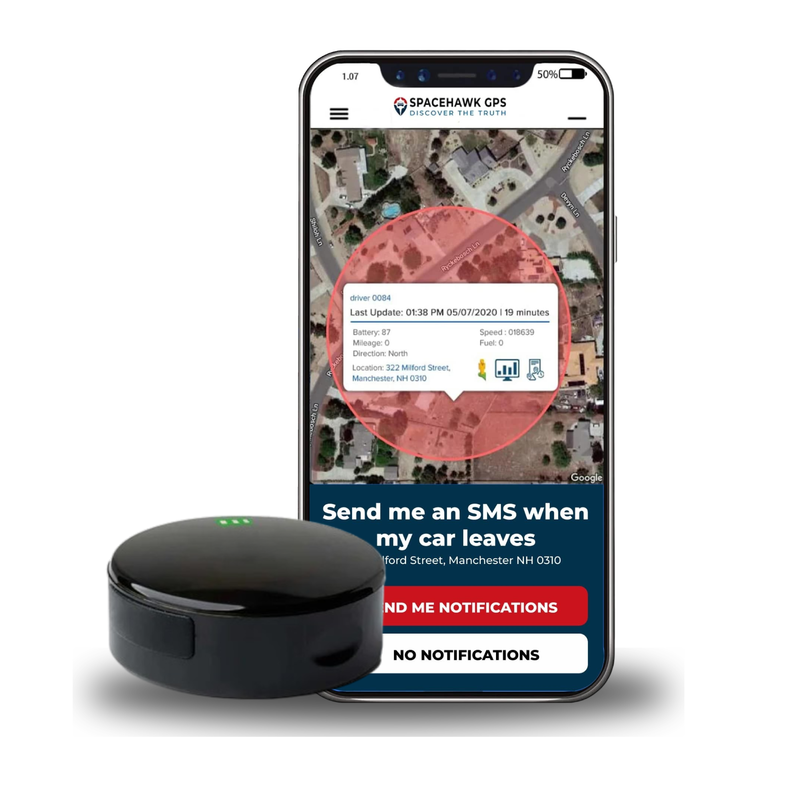
Want Real-Time GPS Tracking for Your Own Vehicles?
Detectors help you find unwanted trackers. SpaceHawk helps you protect what's yours, with real-time GPS updates as often as every 3 seconds, accuracy within about 6 feet, and coverage in 150+ countries for cars, trailers, fleets, and high-value assets.
★★★★★4.6 / 5 · 100,000+ happy customers
- Real-Time GPS & Cellular
- Updates as Fast as 3 Sec
- 150+ Countries Coverage
- ~6 Feet Accuracy
- Hidden Magnetic Mount
- Waterproof & Shockproof







 Buy on Amazon