


Key Takeaways
-
01
GPS asset tracking uses satellites and cellular networks to show real-time locations of tools and equipment.
-
02
Powered GPS asset trackers suit vehicles and machinery while battery trackers suit tools and containers.
-
03
GPS signals weaken indoors so warehouses and storage facilities require RFID or Wi-Fi hybrid tracking solutions.
-
04
Magnetic mounts provide the fastest and most discreet GPS tracker placement on metal tools and equipment.
-
05
Geofence and motion detection alerts notify owners the moment assets move unexpectedly outside working hours.
Stop Losing Valuable Assets, Start Tracking
Every year, U.S. businesses lose billions of dollars to stolen, misplaced, or mismanaged tools and equipment. According to the National Equipment Register (NER) and FBI reports, equipment theft costs U.S. industries more than $1 billion annually and most of it is never recovered.
What if you could stop guessing where your assets are? What if you could see the exact location of every tool, trailer, or generator, just right from your phone?
That’s where GPS Asset Tracking changes everything.
In this guide, you’ll learn:
- What GPS asset tracking is and how it works
- What types of assets you can track
- How to choose the right tracking device for your needs
- The real ROI of asset tracking for small businesses and enterprises
- How to set up alerts, dashboards, and waterproof trackers to stay in control
Let’s explore how you can protect your equipment, prevent theft, and take full control of your assets.
Sources: NER/NICB, FBI Cargo Theft
What is GPS Asset Tracking?

GPS asset tracking is a way to monitor the real-time location of valuable tools,assets, or equipment using a small GPS device. The tracker sends location updates to your phone or computer, helping you keep assets safe, visible, and easy to find.
It’s a form of anti-theft tracker, device-based monitoring or location tracking system designed to reduce theft, improve asset visibility, and streamline operations, especially in industries like construction, logistics, and monitor rental assets.
"Not sure what exactly is a GPS tracker? Learn what a GPS tracker is and how it works."
How Does GPS Asset Tracking Work?
GPS asset tracking uses small GPS devices, known as GPS asset trackers. Asset tracking GPS devices are attached to tools,track expensive gear, or equipment.
These trackers collect location data using satellites and send it through a cellular or IoT network, allowing you to view the real-time location of your assets on a phone app or computer dashboard.
Here’s a simple breakdown of how it works:
GPS Satellites pinpoint the tracker’s exact location anywhere on Earth.
The device receives the satellite signals and calculates its position.
The signal is transmitted through a SIM card or IoT network (cellular or satellite).
Data is sent to your tracking app or dashboard, where you can view your asset’s live location, route history, and alerts.
Most GPS asset trackers can also:
- Ping frequently (every 5–60 seconds) for real-time updates
- Detect motion and trigger alerts when an asset is moved unexpectedly
- Show maps, geofences, and notifications inside an easy-to-use dashboard

This system gives you full visibility and control over your assets, whether you’re managing 5 trailers or 500 power tools.
SpaceHawk Mini GPS Tracker
Everything described above — satellite fix, cellular reporting, live dashboard — in a magnetic case small enough to sit inside a job box or under a trailer frame. No wiring, no install appointment.
Powered vs Non-Powered GPS Asset Trackers
When choosing a GPS tracker, it’s important to understand the difference between powered and non-powered asset trackers. Not all assets have a built-in power source, but they can still need protection. From high-value assets or parcels to trailers and equipment.
Each type is built for a specific kind of equipment, based on whether the asset has its own power source.
Here’s what you need to know:
1. Powered Asset Trackers
These trackers are wired directly into assets that have a power source, like a battery or engine.
- Ideal for trailers, trucks, heavy machinery, and powered containers
- Since they draw power from the asset, they can provide continuous tracking without needing recharging.
2. Non-Powered Asset GPS Trackers
These GPS devices are designed for assets that don’t have built-in power. For items like valuable parcels, toolboxes, storage containers, or equipment in transit, a non-powered GPS tracker is the perfect solution.
These compact, battery-powered trackers are designed to work independently, without needing a power supply from the asset itself. You simply attach the tracker, and it starts sending real-time location updates to your phone or dashboard.
- Mailed or shipped assets and parcels with sensitive or high-value contents
- Toolboxes, hand tools, or small job-site gear
- Storage crates, rental items, or containers in remote areas
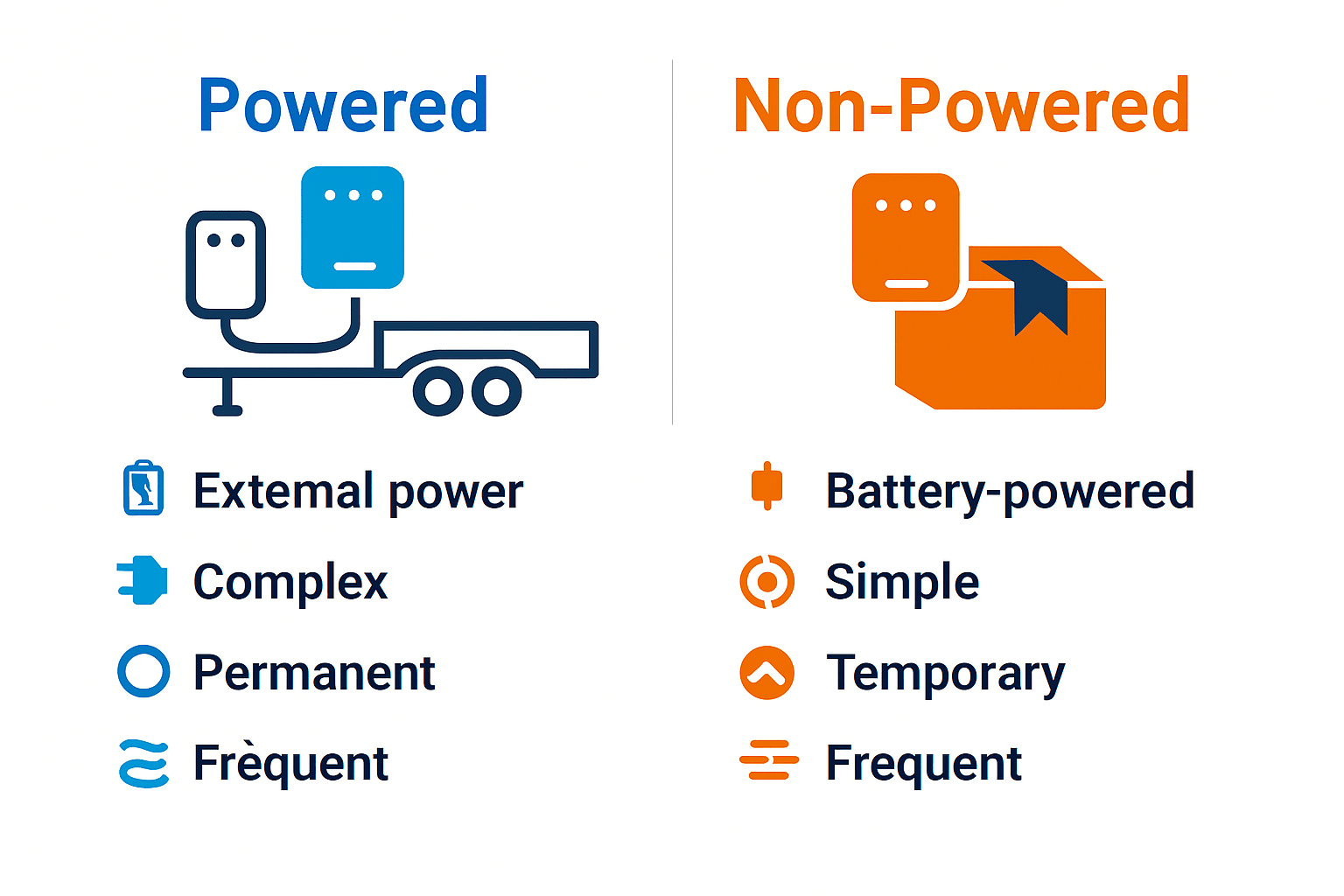
Feature Comparison: Powered vs Non-Powered Assets Trackers
Choosing the right power type ensures you get reliable, long-term tracking without downtime.
| Feature | Powered Trackers | Non-Powered Trackers |
|---|---|---|
| Power Source | Asset’s battery or engine | Internal rechargeable or replaceable battery |
| Best For | Trailers, vehicles, generators | Parcels, toolboxes, containers, small equipment |
| Battery Life | Continuous (no recharge needed) | Varies: 1 week to several months |
| Installation | Wired (professional or DIY) | Magnetic, adhesive, or hidden mount |
| Ping Frequency | Frequent (5–10 seconds possible) | Adjustable (to conserve battery life) |
| Alert Features | Geofence, ignition/motion alerts | Movement alerts, low-battery reminders |
Indoor vs Outdoor Asset Tracking: What You Need to Know
When it comes to asset tracking, location matters. GPS works best outdoors with a clear view of the sky but indoor environments like warehouses, storage yards, or job site trailers can make tracking more challenging.
The Challenge with Indoor Tracking
- GPS signals weaken or get blocked indoors, especially inside metal buildings or underground garages.
- This can result in delayed or inaccurate location updates if you're using a GPS-only device.
Hybrid Tracking Solutions: GPS + RFID + Wi-Fi
To overcome this, many businesses use a hybrid tracking setup: Combine GPS + Wi-Fi for outdoor-to-indoor coverage, and use RFID for detailed inventory tagging inside warehouses.
GPS vs RFID vs Wi-Fi: What’s the Difference?
| Feature | GPS | RFID | Wi-Fi |
|---|---|---|---|
| Coverage | Global (outdoors) | Short range (few feet to 100m) | Limited to Wi-Fi network range |
| Power Required | Yes (battery or wired) | No (passive tags) or minimal (active) | Yes (device must connect to Wi-Fi) |
| Best Use Cases | Vehicles, tools, field equipment | Indoor assets, warehouse tagging | Indoors, assets near routers/APs |
| Real-Time Tracking | Yes | No (scan or reader proximity only) | Partial (if Wi-Fi is stable) |
| Accuracy | High (within feet) | Medium (reader-based zones) | Medium (10–50 feet depending on setup) |
| Cost to Deploy | Medium–High | Low–Medium | Medium (depends on Wi-Fi infrastructure) |

This mix is especially useful for high-value assets that move between indoor and outdoor zones.
Best Tracker Types by Environment
| Environment | Recommended Tracking Type |
|---|---|
| Construction Site | GPS with motion alerts + magnetic mount |
| Warehouse or Yard | RFID asset tracking system or GPS + Wi-Fi |
| Delivery Route | GPS tracker with fallback + live map dashboard |
| Storage Container | Waterproof, battery-powered GPS device |
Top GPS Trackers by Use Case (Mini Comparison)
The best choice depends on what you're tracking, where it's going, and how long it needs to stay active. Below are the most popular types of GPS asset trackers, and each suited for different environments and assets.
Tracker Types & Use Cases
| Use Case | Best For | Key Features |
|---|---|---|
| Waterproof Outdoor Trackers | Trailers, containers, heavy-duty equipment | Weatherproof casing, dust-proof, impact-resistant, long battery life |
| Magnetic Mini Trackers | Tools, parcels, covert use | Compact design, strong magnet, easy to hide, real-time alerts |
| Trackers with Long Battery Life | Remote assets, idle storage, seasonal gear | Battery lasts weeks or months, low-power mode, motion-activated ping |
What to Look For in a Tracker
Size
Small enough to mount discreetly
Battery life
Longer battery = less maintenance
Mount type
Magnetic, adhesive, strap-on, or screw mount
Alerts
Geofencing, low battery, motion
App features
Live map, history, dashboard access
What Assets Can You Track with GPS?
Whether you're managing a job site, a warehouse, or a delivery fleet, the GPS asset tracking gives you full visibility over the tools, equipment, and containers that matter most.
Here are the most common types of assets you can track using GPS:
1. High-Value Tools & Equipment
Track small but expensive items like:
- Power drills
- Generators
- Laser levels
- Surveying tools
These are often targets for theft and easy to misplace, making a high-value GPS asset tracker essential.
2. Rental Equipment
Perfect for:
- Air compressors
- Cement mixers
- Forklifts
- Mobile job-site trailers
If you lease or rent out equipment, GPS lets you know where it is, when it moves, and how it’s used.
3. Storage Containers & Inventory
Use GPS or hybrid tracking to monitor:
- Shipping containers
- Warehouse inventory pallets
- Field service kits
- Medical or emergency equipment cases
For indoor zones, consider adding an RFID or Wi-Fi–based inventory tracking system as a backup.
4. Vehicles & Fleet Units
Great for:
- Company vans
- Delivery trucks
- Utility trailers
- Flatbeds and haulers
Fleet asset tracking helps optimize routes, reduce idle time, and improve safety with real-time driver monitoring.
How GPS Asset Tracking Pays Off (ROI)
GPS asset tracking isn’t just about knowing where things are, it’s about saving money, time, and stress. Whether you're running a fleet, managing tools, or protecting inventory, the return on investment (ROI) is real and measurable.
Real ROI Formula
Here’s a simple way to estimate your savings:
Saved Cost = (Average Tool Value × Theft Rate) – Tracker Cost
GPS asset tracking is a cost-saving investment. Let’s say your average tool costs $1,500, and your annual theft rate is 10%. That’s $150 lost per tool, every year. If a GPS tracker costs $50, your net savings is $100+ per tool, plus peace of mind.
Real Business Benefits
Using a reliable asset tracking system can help your business:
- Prevent theft: Tools tracked with GPS see up to 90% fewer losses
- Recover stolen equipment faster
- Lower insurance premiums by showing proof of asset protection
- Improve utilization: Know which assets are being used and where
- Avoid downtime: Eliminate delays caused by missing gear
GPS tracking isn’t an expense, it’s an investment. The money you save in lost tools, missed work, and insurance claims far outweighs the device cost.
How GPS Asset Tracking Prevents Theft and Recovers
Losing tools or high-value assets can slow down work and lead to delays and stress. GPS asset tracking helps stop that from happening.
With features like real-time location updates, movement alerts, and safe zone settings, you’ll know right away if something is moved or taken. If something does go missing, GPS tracking can help you find it quickly and bring it back.
It’s like having an extra set of eyes on your valuable assets, 24/7.
Real-World Recovery Example
In Howard County, MD, police used a GPS-tagged tool to uncover a massive theft ring, recovering approximately 15,000 stolen tools worth $3–5 million through search warrants at 12 locations.
This kind of success story isn’t rare. Companies using GPS trackers consistently recover stolen assets faster and reduce repeat theft.
Built-In Theft Prevention Features
Modern GPS trackers act like silent digital bodyguards for your assets. Key anti-theft features include: Theft-prevention features that act like a security system, geofencing alerts, motion detection, live-tracking, covert placement etc which are we are going to discuss in the top feature section.
How to Attach a GPS Tracker to Assets
Once you’ve picked the right GPS tracker, the next step is making sure it stays secure and hidden. Luckily, most asset tracking devices are designed for easy installation.
No wires, no tools, and no stress.

Common Mounting Options
| Mount Type | Best For | Benefits |
|---|---|---|
| Magnetic | Metal tools, trailers, job boxes | Quick to install, easy to reposition, discreet |
| Adhesive | Plastic surfaces, packages, crates | Lightweight and fast—ideal for parcels |
| Strap-On / Zip Tie | Pipes, irregular shapes, power tools | Stable hold, reusable, low visibility |
| Screw-Mounted | Permanent tracking on equipment | Tamper-resistant, long-term use |
Quick Installation Checklist
- Choose a clean, dry, and hidden surface
- Mount the tracker in a location not easily seen or accessed
- Test the signal strength before final placement
- Make sure the device is firmly secured to prevent loss or vibration
- If battery-powered, fully charge before use
Top Features to Look For in Asset GPS Trackers
Not all GPS trackers offer the same features. When choosing the right device for your business, look for the features that improve tracking accuracy, battery life, and theft prevention.
Here are the top must-have features for reliable asset GPS tracking:
Key Features Checklist
Waterproofing
Protects your tracker in rain, mud, snow, and harsh job site conditions. A must for outdoor equipment or containers.
Geofencing
Set virtual boundaries and get instant alerts when an asset moves outside a safe zone.
Real-Time Location Updates
Know where your asset is- anytime, anywhere. Ideal for fleet tools, rental gear, or high-value shipments.
Motion Detection
Get notified if an asset is moved unexpectedly—especially useful after hours or during off-site storage.
Mobile App & Dashboard Access
Track, monitor, and manage all devices from a single dashboard on your phone or computer.
Long Battery Life
Choose a tracker that lasts weeks or months on a single charge, especially for remote or rarely accessed equipment.
Covert Placement
Many GPS trackers are compact and designed to be hidden on or inside tools, vehicles, or containers—making them harder for thieves to find or remove.
Before you hide a tracker: know the law
Covert placement is legal on assets your business owns. Placing a tracker on property you do not own, without the owner's consent, can bring criminal charges and civil liability.
Several states treat non-consensual tracking of a person as stalking or unlawful surveillance. Tracking a spouse, partner, or ex without their agreement is not a grey area. If a vehicle is driven by an employee or a third party, get written consent and put the policy in writing before the device goes on.

Quick Tracker Tips: Best Practices from the Pros
- Use magnetic trackers to mounts on metal tools and job boxes
- Combine geofencing + motion alerts to catch theft instantly
- Use non-powered trackers for anything with its own battery of GPS tracker
- Fully charge battery-powered trackers before attaching
- Test GPS signal before final placement
- Bookmark your dashboard on your phone’s home screen for one-tap access to all asset locations, perfect for job site checks or off-hours security.
How to Monitor Asset Movement from Your Dashboard or Phone App
Once your GPS tracker is installed, monitoring your asset’s movement is simple. Most devices connect to an easy-to-use dashboard or mobile app, giving you full control in just a few taps.
Whether you're tracking your assets like tools, trailers, or inventory in real time, the GPS tracker dashboard makes it effortless to locate, manage, and protect your assets from anywhere.

Step-by-Step: How It Works
Log in to your GPS tracking app or online dashboard
Select the asset you want to monitor from your asset list
View live map location, current status, and movement trail
Check alerts for motion, geofence breaches, or low battery
Review history, usage logs, or past routes (optional)
Set up custom alerts via text, email, or push notifications
Final Thoughts: Time to Stop Guessing Where Your Assets Are
Every lost tool, misplaced trailer, or delayed shipment costs you time, money, and peace of mind. With GPS asset tracking, you’re not just keeping tabs, you’re taking control.
Whether you’re managing a few high-value items or hundreds of mobile assets, the right tracking system can help you:
- Prevent theft and loss
- Know where every asset is, at all times
- Streamline operations across job sites or locations
- Protect your bottom line
With the right GPS tracking system, asset loss becomes a thing of the past.

Ready to Take Action?
Attach SpaceHawk to your highest-value asset today and get an alert the moment it moves without you.
Managing vehicles too? Learn how GPS tracking for fleet management can save fuel and boost output in 2026.








 Buy on Amazon