


Key Takeaways
-
01
Hardwiring a GPS tracker to the vehicle battery provides continuous power without charging.
-
02
Tightening the connector screws firmly creates a waterproof seal around the GPS device connection.
-
03
SpaceHawk attaches to metal surfaces using built-in magnets or to any surface using Velcro.
-
04
Position hardwired GPS trackers away from obstructions near windows for strongest signal accuracy.
-
05
The SpaceHawk optional hardwire kit converts the portable tracker to a permanent vehicle install.
How to Hardwire Your SpaceHawk GPS: A Step-by-Step Guide
Tired of losing signal or running out of battery at the worst possible moment? Steal this secret: hardwiring your GPS tracker guarantees constant power, uninterrupted tracking, and rock-solid reliability. No more guesswork, no more dead devices—just flawless performance, every time.
In this guide, you'll learn:
- How to connect your GPS tracker directly to your vehicle's power system—no more battery anxiety.
- The exact steps to secure and waterproof your device for maximum durability.
- Pro tips for optimal placement to ensure the strongest GPS signals, no matter where you go.
Whether you're tracking a car, trailer, or even a golf cart, this step-by-step walkthrough will transform your setup. Ready to ditch the headaches and master how to install a hardwired GPS tracker? Let's dive in.
Setup and Connection Points
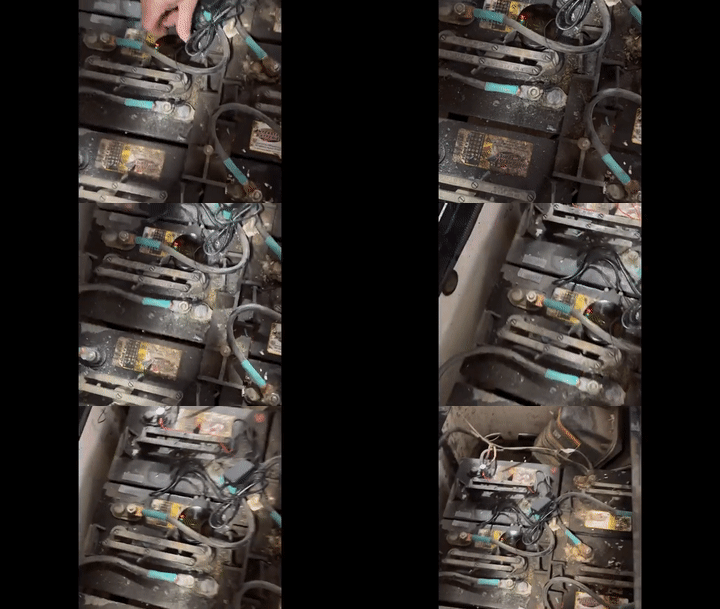
For this guide, we'll use the SpaceHawk GPS and a golf cart battery array as an example, but the process is adaptable for various needs. With these four simple steps, you'll be able to hardwire your GPS tracker without needing professional assistance.

Choose Your Connection Point
Identify where you'd like to connect both the red wire and the black terminal. Though we're demonstrating with a six-volt golf cart battery array, you can adjust these steps according to your particular setup.
Connect the Wires
Carefully loosen the bolts at your selected connection points. Attach the red wire to the positive terminal and the black wire to the negative. You're off to a fantastic start!

One Tracker, Two Ways To Run It
Use SpaceHawk portable out of the box with its rechargeable battery, or add the optional hardwire kit for permanent, always-on power straight from your vehicle's battery — no charging required either way.
Get Your GPS Tracker Ready

Preparation
Firstly, remove the rubber cap from your SpaceHawk. Since we're setting it up for a permanent connection, the cap won't be necessary.
Make the Connection
Retract the pins at your SpaceHawk's connection point. Connect the hardwire kit to your GPS device. If you notice a red light, it indicates your device is charging. Take note: charging doesn't mean the device is turned on.
Power Up and Position Your Tracker
Activate the Device
Use the provided pin to power on your SpaceHawk. Flashing LEDs confirm it's operational. A solid red light? You've established a stable connection!
Finalize the Connection
Securely tighten the connector screws, ensuring they're firm without over-tightening. This will maintain the rubber's integrity, creating a waterproof seal.
Position Your GPS
Decide on a location for your tracker. The built-in magnets can attach to metal surfaces, but for non-metal areas, consider using Velcro for a strong hold.
Ensure Everything is Secure

Final Checks
Thoroughly inspect all your connections. Ensure they're tight, and your device is firmly in place.
And there you have it! Your SpaceHawk GPS is now hardwired, water-protected, and poised to provide exceptional tracking. Though we've used a golf cart for this demonstration, the same principles apply across different vehicles. Always exercise caution when working with electrical systems, and get ready to enjoy your enhanced tracking capabilities!








 Buy on Amazon