


Key Takeaways
-
01
GPS tracking legality depends on vehicle ownership, consent and purpose, not on tracker size or how well it's hidden.
-
02
Owning the car isn't always enough: tracking another driver without consent can break stalking laws, and some states require every owner's consent.
-
03
Real-time GPS trackers update vehicle location every few seconds for instant live visibility.
-
04
A magnetic GPS tracker attaches to any metal vehicle surface in seconds without tools.
-
05
GPS car trackers provide route history, speed data and geofence alerts alongside live location.
To secretly track a car you own: 1. pick a real-time GPS tracker, 2. place it out of sight on the vehicle, and 3. activate it and follow the car in the tracker's app.
Tracking a car you don't own, or another driver without their consent, can be illegal even when your name is on the title, so check your state's law first.
How to Secretly Track a Car: A Legal GPS Guide From an Expert
You're here, which means something isn't sitting right and you want to secretly track a car. A vehicle isn't where it should be, the story doesn't quite line up, or you're responsible for something valuable and need real answers instead of assumptions.
I've had this exact conversation with people for years, and it almost always starts with the same problem, too many questions but no solid answers.
I'm Ryan Horban, and after 15+ years working hands-on with GPS trackers across rental fleets, construction sites, and everyday vehicles, I've learned that good car tracking replaces doubt with clear location data. When used properly, tracking helps with theft recovery, safety for loved ones, fleet oversight, and protecting assets you own or manage.
In this guide, I'll walk you through how car tracking really works, what's legal, and which GPS tracking options actually deliver reliable location data, so you can move forward with confidence.
Before talking devices or setup, let's get clear on the legal rules.
Affiliate Disclosure: As an Amazon Associate, SpaceHawk GPS earns from qualifying purchases. SpaceHawk and Konnect GPS are our own brands, and every tracker in this guide, ours included, is ranked on its specs and field performance.
Is It Legal to Secretly Track a Car in the U.S.?
Usually yes, when you own the vehicle and you drive it, or when you have clear authorization to monitor it. Tracking a car you do not own, or tracking another driver without their consent, can be illegal depending on state law, even when your name is on the title.
This question comes up early because it should. I've worked with GPS tracking across multiple U.S. states, and legality is never about how small the tracker is or how well it's hidden. GPS tracking laws come down to ownership, consent, and purpose.

If the car is yours or it's registered to your business, you're usually on solid ground. That includes personal vehicles, fleet vehicles, rental units, and other assets you're responsible for. In those cases, using a car GPS tracker to monitor vehicle location, route history, or real-time movement is a common and accepted practice in the U.S.
Where people get into trouble is assuming intent matters more than permission. But it doesn't. I've seen situations where someone thought they were "just being careful," only to find out later they crossed a legal line by tracking a vehicle they didn't own, or a person who never agreed to it.
Here's how I explain it in plain terms:
- Tracking your own vehicle is generally legal.
- Tracking company or fleet vehicles is generally legal when drivers are notified.
- Tracking someone else's car, or another driver, without consent can violate privacy and stalking laws.
Ownership has limits too. Some states require consent from every owner of the vehicle, so a jointly owned car doesn't automatically give one owner the right to track the other. Here's what three state laws actually say:
Most U.S. states follow these same principles, even though the fine details can vary. If you want a state-by-state breakdown and real examples, this guide explains it clearly: Is GPS Tracking Legal in the U.S.? GPS Tracking Law.
Never use a GPS tracker to follow a spouse, partner or anyone else without lawful consent or a clear legal right to the vehicle. This is general information, not legal advice. If you're unsure whether your use is lawful, talk to a qualified attorney first.
If you feel unsafe, or you think someone is tracking you without your consent, the National Domestic Violence Hotline (1-800-799-7233, thehotline.org) and the Stalking Prevention, Awareness, and Resource Center (stalkingawareness.org) can help you plan your next step safely.
Once you understand where the legal boundary sits, everything else becomes much easier. From there, the real question isn't whether you can track a car, but how GPS car tracking actually works, and what kind of data you'll really get.
What Is GPS Car Tracking and How Does It Work?
GPS car tracking is about turning movement into clear, usable information. Car GPS tracking uses satellites and cellular networks to determine a vehicle's location and send that location data to your phone or computer in near real time.

Now let me explain this the way I usually do when someone asks me face to face.
At a basic level, a GPS tracker sits quietly in or on the vehicle and listens for GPS signals from satellites orbiting above, then works out its position by trilateration. When the device receives GPS data from multiple satellites, it calculates the vehicle location with surprising accuracy. That raw location data is then sent over a cellular network so you can actually see it on a map instead of just numbers.
In practical terms, this means you're not "pinging" the car. The tracker is doing the listening, the math, and the reporting, all without any interaction from the driver.
Once you understand that, the difference between tracking styles starts to make sense.
What's the Difference Between Real-Time and Delayed Location Updates?
Real-time GPS tracking means the tracker sends frequent location updates, sometimes every few seconds, so you can see movement almost as it happens. Real-time tracking is useful when timing matters, like theft recovery or active fleet monitoring.

But delayed updates work differently. The tracker records location points and sends them less often, which saves battery and lowers costs. The tradeoff is simple:
- Faster updates mean higher data use and shorter battery life.
- Slower updates mean longer battery life but less immediate detail.
Neither option is "better" across the board, and the right one depends on how closely you actually need to watch the vehicle.
In my experience, GPS tracking works best when you understand its limits and expectations are realistic. Vehicle tracking is excellent for knowing where the vehicle is, where it's been, and how it moves over time.
When you match the technology to real-world use, GPS tracking becomes a reliable tool instead of a source of frustration. And that's exactly how it should be used.
How to Secretly Track Your Own Car in 5 Steps
Here's the full process I walk people through, from picking a tracker to using the data. Open each step for the details.
1. Choose a Live GPS Tracking Device

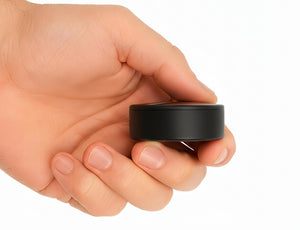
Before you can begin tracking your car, you first need a real-time GPS tracking device. With so many trackers to choose from, look for one built for discreet placement, live updates and a strong mount, like SpaceHawk.
SpaceHawk is a real-time GPS tracker built to give you clear location facts on the vehicles you own. Unlike Bluetooth tags, SpaceHawk is wireless, waterproof, and engineered with a strong magnetic mount, so you can attach the tracking device under your car in seconds and follow it from an iPhone or Android phone.
Whether you want to recover a stolen car, see if your teen's car is going dangerously fast, or keep company vehicles accountable with driver notice, SpaceHawk is the real-time GPS for you. See the SpaceHawk vehicle GPS tracker →
2. Install the GPS Car Tracker

Once you have the GPS vehicle tracker, install it on your car in a discreet location. We suggest a device with a waterproof magnetic mount, so it can sit on the frame or under a panel without wiring.
3. Activate the Vehicle GPS

Once the GPS locator is on the vehicle, you will need to activate it. This usually means creating an account with the manufacturer and choosing a tracking plan. Most real-time trackers, SpaceHawk included, have the cellular SIM built in, so you don't buy one separately.
4. Track Your Vehicle

With the car tracking device activated, you will be able to monitor the exact location of your vehicle in real time using a free mobile app. You can also set up geofencing and receive alerts if the vehicle enters or exits a certain area.
5. Act on the Facts
With clear location data on your own vehicle, you can recover a stolen car faster, coach a teen driver about speed, or confirm a company vehicle's route. If the data points to a crime or a legal dispute, take it to the police or an attorney rather than acting on it yourself.
How Can I Hide a GPS Tracker on a Vehicle?
If you're looking to hide a GPS tracker on your vehicle, there are a few things to keep in mind. First, consider the type of tracking device you'll be using. There are many different types of GPS trackers available, such as truck GPS solutions and GPS fleet tracking systems. You will want a device that is small and discreet, so it can easily stay out of sight on your car.
Once you have a GPS tracker, you'll need to find a good spot. Some popular locations include the trunk, under the seats, or under the vehicle on a metal frame rail. Keep battery trackers out of the engine bay, where heat can shorten battery life.

For a full walkthrough with photos, see our guide on where to hide a GPS tracker on a car. When installing the GPS tracker, follow the manufacturer's instructions carefully, so the tracker device is ready for theft recovery or asset tracking when you need it.
Ways to Track a Car Without a GPS Box
A dedicated GPS tracker isn't the only way to see where a car is. Three other options come up a lot, and each one has a clear limit:
Phone Location Sharing
Apple Find My, Google Find Hub and Life360 show where the driver's phone is, not the car, and only after the driver turns sharing on.
AirTag and Tile
Bluetooth tags only update when a nearby phone passes by, and phones alert people when an unknown tag travels with them.
Car-Maker Apps
OnStar and FordPass can locate newer connected cars, but only for the car's account holder, and some features need a paid plan.
For your own car, these work as a backup. For live tracking, alerts and route history on a car of any age, a GPS tracker is still the most reliable option.
How to Choose a GPS Tracker for Your Car
Most trackers look alike in photos. These three specs decide whether one fits how you actually drive and park:
Battery Life
Battery trackers last from a few days to over a year per charge, depending on how often they report. Plug-in and hardwired trackers run on the car's power.
Update Speed
For following a moving car, look for updates every 3 to 60 seconds. For checking where a parked car sits, hourly reports keep the battery and plan cost low.
Install Type
Magnetic trackers move between cars in seconds, OBD-II trackers plug in under the dash, and hardwired trackers are the most permanent option.
Top 10 GPS Trackers for Discreet Vehicle Monitoring
When people ask me about the best devices for discreet car tracking, I look at reliability first. Not marketing claims. Not flashy specs. Real-world performance. These are GPS tracker devices that consistently deliver accurate location data, dependable updates, and solid app usability.
Here's how all ten compare on price, battery life, install type and monthly fee:
| Comparison | SpaceHawk | Konnect OBD2 | Tracki Universal | Spark Nano 7 | LandAirSea 54 | Spytec Atlas | Americaloc GL300 MXW | Trak-4 | Bouncie | Optimus 3.0 |
|---|---|---|---|---|---|---|---|---|---|---|
| Product |  |
 |
 |
 |
 |
 |
 |
 |
 |
 |
| Price | $39.95 | $39.95 | From $12.99 | From $17.95 | From $29.95 | $29.95with first month | ~$71-$82with 3 months | From $13.88 | $89.99 | $26.95with case |
| Battery Life | 1-3 weeks, 3-6 months low power | Powered by the car | 5-7 days, up to 45 in saver | About 7 days typical use | 1-3 weeks, up to 6 months low power | Up to 14 days | About 1 month | 12-18 months at daily reports | Powered by the car | Up to 1 month at 1-min updates |
| Install Type | Built-in magnet | OBD-II plug-in | Portable, clips or case | Magnetic case | Built-in magnet | Magnetic case | Magnetic case | Portable Mount | OBD-II plug-in | Magnetic case |
| Monthly Fee | From $9.952-yr prepay, $19.95 monthly | $8.95 | From $9.952-yr prepay, $19.95 monthly | From $9.99 | From $19.95 | From $22.95prepaid | $19.98$17.98 annual | From $6.99annual, $12.99 monthly | About $9.65 | $19.95$15.95 annual |
| Where to Buy | Buy on Amazon | Buy on Amazon | Buy on Amazon | Buy on Amazon | Buy on Amazon | Buy on Amazon | Buy on Amazon | Buy on Amazon | Buy on Amazon | Buy on Amazon |
Prices and plans change often, so treat these as typical U.S. prices from each maker's listing. Battery life always depends on the update setting you choose.
1. SpaceHawk Hidden GPS Tracker
A compact, magnetic-mount GPS tracker designed for discreet vehicle tracking. SpaceHawk offers real-time GPS updates, strong battery life, and simple app-based monitoring. Ideal for personal vehicles and asset tracking when low visibility is needed.
Updates arrive as often as every 3 seconds with accuracy within about 6 feet, and the IP67 waterproof case holds up under a car in any weather. The battery runs 1 to 3 weeks per charge, or 3 to 6 months in low-power mode, across 150+ countries.
2. Konnect OBD2 GPS Tracker
A plug-in car GPS tracker that connects to the OBDII port. With an OBD extension cable, it can be positioned more discreetly. Good for daily drivers needing consistent vehicle tracking without battery maintenance.
Konnect sends location updates as often as every 3 seconds, with speed and geofence alerts and a year of trip history, and fits most cars built after 1996.
3. Tracki Universal GPS Tracker
A small, battery-powered tracking device offering real-time tracking and global coverage. Flexible option for short-term or portable use. Formerly sold as the Tracki Mini.
At about 1.26 oz, the Tracki Universal sends automatic updates every minute, with 5-second pings on demand. The replaceable 600 mAh battery runs 5 to 7 days in active use, or up to 45 days in battery save mode.
4. Spark Nano 7 GPS Tracker
A compact magnetic GPS tracker known for reliable location updates. Often used for discreet vehicle monitoring with a rechargeable battery setup.
BrickHouse Security's Spark Nano 7 rides in a water-resistant magnetic case on 4G LTE. The battery lasts about 7 days of typical use, based on one hour of driving per day, or up to 14 days on standby.
5. LandAirSea 54 GPS Tracker
A durable mini GPS tracker with a strong magnetic mount and weather-resistant casing. Suitable for exterior placement under vehicles.
The LandAirSea 54 weighs about 75 g, carries an IP67 rating and works in 155+ countries. The battery runs 1 to 3 weeks, or up to 6 months in low-power mode, and the $49.95/mo plan unlocks updates every 3 seconds.
6. Spytec Atlas GPS Tracker
Spytec's Atlas replaces the older GL300 in its lineup. The 3.07-inch tracker ships in a weatherproof magnetic case and works with the Hapn app on iPhone and Android.
Updates run as fast as every 5 seconds, with geofence and speed alerts and a Time Machine history view. The battery lasts up to 14 days per charge.
7. Americaloc GL300 MXW GPS Tracker
An updated GL300 offering reliable location data and flexible update intervals. Works well with a magnetic case for discreet installs.
The GL300 MXW weighs about 2.3 oz, updates every 5 to 60 seconds and runs about a month per charge. Service is $19.98/mo, or $17.98/mo on an annual plan.
8. Trak-4 GPS Tracker
A rugged tracking device designed for longer-term asset tracking. A separate 12V model can be hardwired for permanent vehicle tracking setups.
The USB model runs 12 to 18 months per charge when it reports once a day, and adds Wi-Fi location when GPS is blocked. Plans start at $6.99/mo billed annually for hourly reports, with 10-minute and 1-minute options.
9. Bouncie GPS Tracker
An OBD-II plug-in tracker offering real-time location tracking, driving data, and vehicle diagnostics. Best suited for transparency-focused monitoring.
Bouncie plugs in under the dash, so there is nothing to charge, and adds trip history, speed monitoring, geofences and accident notifications on one flat plan.
10. Optimus 3.0 GPS Tracker
A compact car tracker device known for strong battery life and accurate GPS tracking. Offers flexible update settings and reliable route history reporting.
The bundle includes a heavy-duty waterproof case with twin magnets. At the default 1-minute reporting rate, the battery runs up to a month, and plans drop to $15.95/mo on annual billing.
The "best" GPS tracker depends on how you plan to track vehicles: battery flexibility, permanent installation, update frequency, and subscription costs all matter. In my experience, reliability and consistent location updates are far more important than extra features you may never use.
If discreet design and ease of installation are priorities, SpaceHawk remains one of the more purpose-built options for vehicle tracking in the U.S.
Common Reasons People Track Vehicles (Real Use Cases)
People track vehicles for a lot of reasons, but in my experience, it usually comes down to one thing: they want reliable information. When GPS tracking is used the right way, it solves practical problems without adding stress. Most real-world use cases fall into a few clear categories.

Personal Vehicles and Theft Recovery
A way to track your vehicle and access location information if something goes missing or doesn't return when expected.
Teen Drivers
Helping new drivers build better habits while you understand where the car actually is.
Elderly Family Members
Making sure loved ones get where they're going safely, with their consent and without constant check-ins.
Business and Fleet Tracking
Monitoring vehicle tracking for routes, job completion, and day-to-day operations, with drivers notified.
Protecting Valuable Assets
Keeping tabs on vehicles or equipment that represent real money when they're on the road.
When tracking is tied to a clear purpose for safety, recovery, or accountability, car tracking stays useful, reasonable, and effective.
Final Advice: How to Track a Car Secretly
If there's one thing I've learned after years of hands-on GPS tracking work, it's that clarity beats complexity every time. Once you understand what's legal, choose a GPS vehicle tracker that fits your situation, and use it responsibly, the stress around tracking usually disappears. Start with legality. If the vehicle is yours or you're authorized to monitor it, you're starting from the right place.
Skip that step, and even the best car GPS tracker won't save you from trouble later. That's always the first box I make people check.
Next comes choosing the right device. Not everyone needs the smallest mini GPS or the fastest real-time GPS updates. In my experience, the right tracker is the one that fits your use case with battery life, installation style, subscription cost, and how often you actually need location updates.
Finally, use car tracking responsibly. Good car tracking replaces guesswork with facts. Vehicle GPS tracking shouldn't create more stress or cross lines you wouldn't want crossed yourself. If you take anything from this guide, let it be confidence: confidence to choose the right GPS tracking setup and use it the right way, without shortcuts or second-guessing.
If you're looking for a low-profile option that's built specifically for discreet vehicle tracking, the SpaceHawk Hidden GPS Tracker is worth a closer look. SpaceHawk is designed to be easy to install, reliable in real-world conditions, and simple to manage without overcomplicating things.

A Discreet GPS Tracker for the Car You Own
SpaceHawk mounts out of sight in seconds and shows your car's live location as often as every 3 seconds, so you know where it is the moment it moves.
★★★★★4.6 / 5 · 100,000+ happy customers
- 3-Second Live Updates
- Built-in Magnet
- IP67 Waterproof
- Geofence Alerts
- Route History
- US Based Support







 Buy on Amazon